Storia e architettura degli arsenali di Creta
Le fonti degli arsenali veneziani di Creta, riunite in un archivio digitale da esplorare
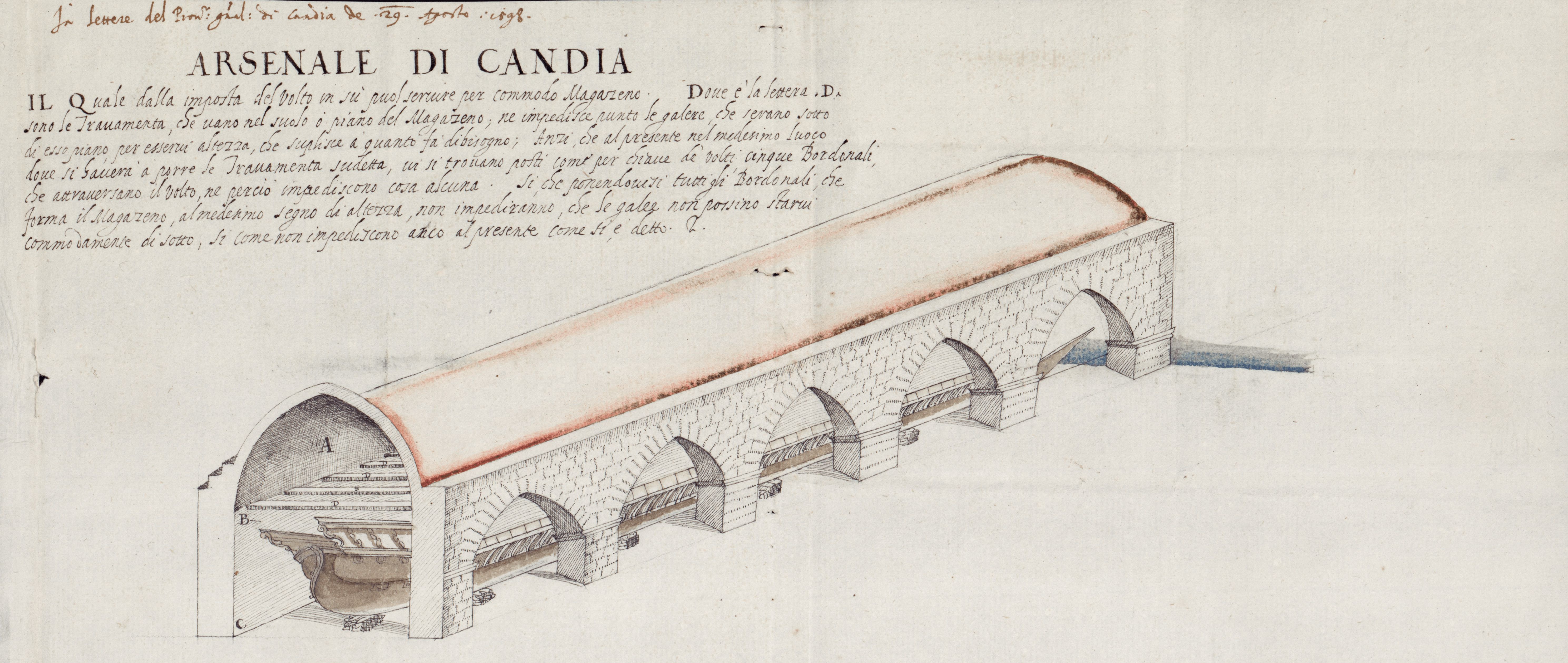
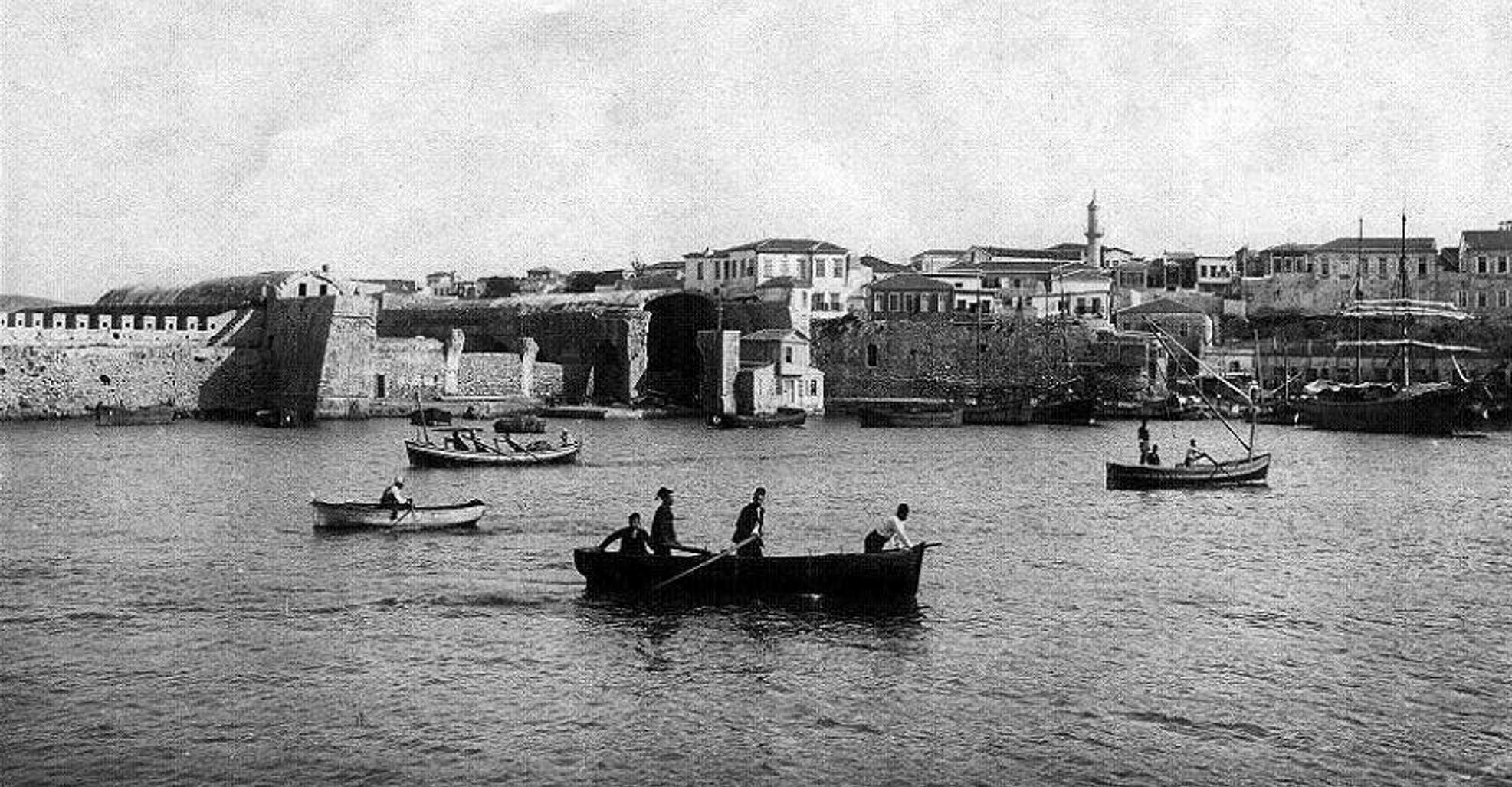
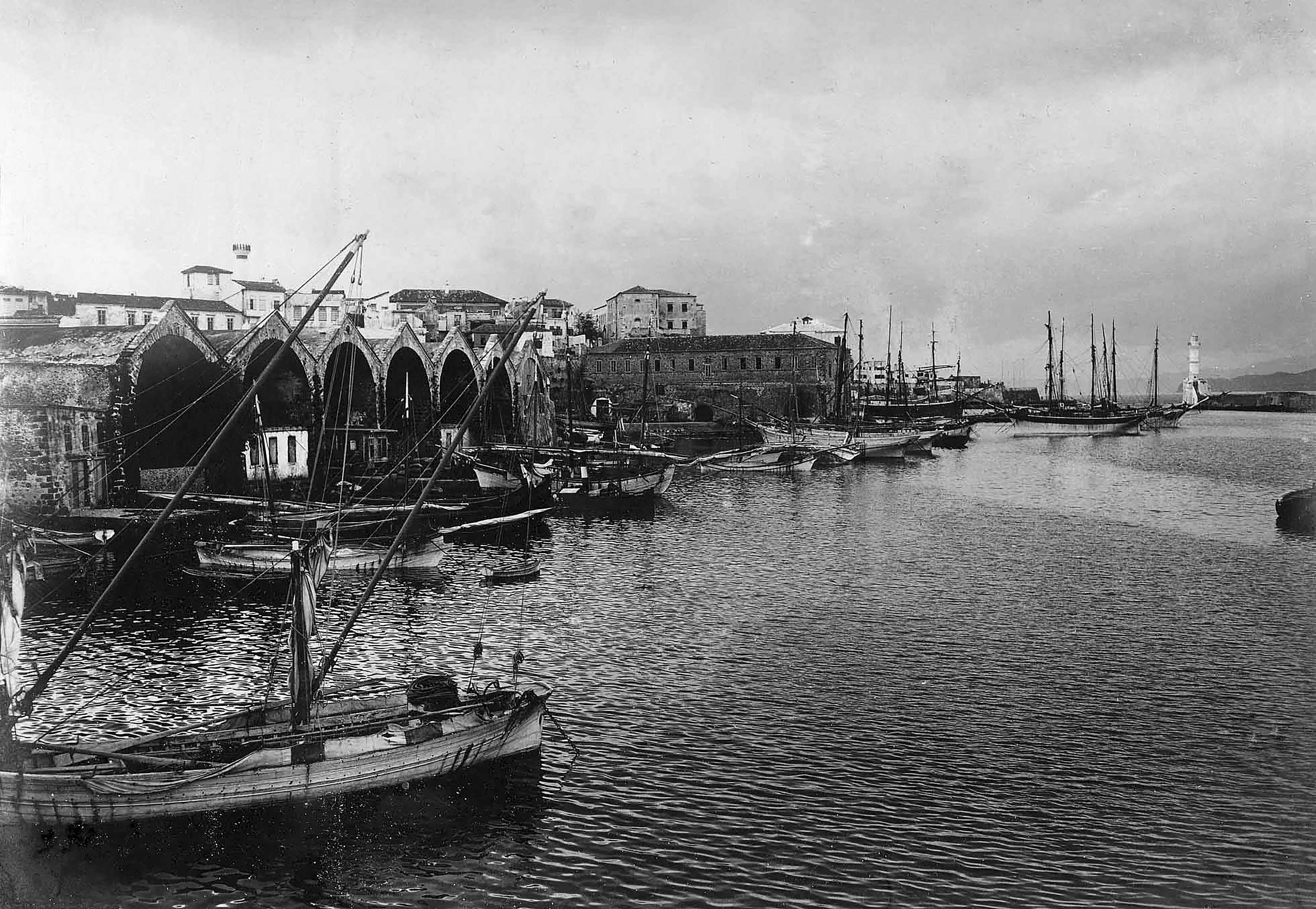
The arsenals of Heraklion and Chania are among the most imposing surviving traces of the Venetian presence in Crete. Their history spans almost the entire period of Venetian rule on the island and offers a privileged perspective from which to explore the relationships between architecture, defence, state administration, port activities, and urban life.
Elisabetta Molteni
Alberto Pérez Negrete
The project developed from research begun in 2020 in connection with the restoration of the arsenals of Chania and subsequently extended to the large arsenal complex in Heraklion. Research in Venetian archives has led to the collection and study of an extensive corpus of sources on the architectural, construction, and urban history of the two complexes, from the earliest medieval evidence to the beginning of the seventeenth century.
Senate deliberations, dispatches from rectors and provveditori, end-of-office reports, and documents from the archives of the Venetian administration in Crete make it possible to reconstruct not only the different phases in the construction and expansion of the arsenals, but also the ways in which they operated. These sources reveal the people and institutions involved in the building works, the circulation of materials between Venice and Crete, the work of skilled craftsmen, the organisation of naval activities, and the relationship between the arsenals, the ports, the fortifications, and the urban fabric of Heraklion and Chania.
The project thus brings together documents now dispersed across different archival fonds and series, providing a shared documentary basis from which to develop new avenues of research into Venetian Crete and, more broadly, Venice’s presence in the eastern Mediterranean.
Most of the sources are held at the State Archives of Venice, particularly in the Senato series, the Duca di Candia fonds, the Relazioni del Collegio, and the Dispacci dei Provveditori da Terra e da Mar e altre cariche. The corpus also includes materials held by the Correr Museum Library and the Marciana National Library.
The documentary corpus can be explored through different pathways: sources can be selected and connected by date, person, place, and office, making it possible to reconstruct chronologies, follow the activities of individual Venetian representatives, or examine together documents produced in different contexts.
Transcriptions are presented alongside reproductions of the original documents, allowing users to compare the text directly with its source. Readers can verify readings, examine the characteristics and particular features of individual documents, and use the images themselves as a starting point for further research.
Texts, documents, and data thus become part of a single research environment. The digital structure makes it possible to approach the corpus through questions other than those that shaped the publication itself and to establish new connections between the sources. The project is therefore intended both as a documentary edition and as an open structure for research: a way of bringing the archive to the reader.
Project implemented with the contribution of the Veneto Region pursuant to Regional Law No. 39/2019.